Why taking a bath doesn't help: Developing strategies to manage emotions when they become intense2/27/2017 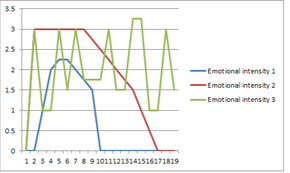 Skills to manage emotional intensity often need to be adapted according to the type of emotion experienced and the intensity. Once triggered, emotions often quickly rise and then fall naturally back to baseline (blue line). For someone with mental health problems such as borderline personality disorder, the intensity of the emotion is often higher, longer lasting and the return to baseline is much slower (red line). Sometimes people with mental health problems will use harmful means to quickly bring the intensity of their emotions down but overall these strategies leave them more vulnerable to further emotional intensity episodes and more reliant on harmful means to regulate their emotions (green line).
Often people we work with say they're told to "have a bath" to manage the intensity of their feelings. This can be the worst thing to be told; most people (mental health problems or not) are unlikely to be able to relax in the bath at the peak of their stress. However, for some people a bath can be a useful soothing activity once the emotion starts to come down. So it's about choosing an action appropriate to the intensity of the emotion. At the peak of distress, often it is most important to think of ways of reducing your physiological (body) arousal. This could be by using methods to regulate your breathing (taking deep breaths and focusing only on your breathing in the moment), slowing your movements in a deliberate manner, talking yourself through what you are doing physically in the moment or doing the opposite of your urges. If you've learned to cope with emotions by harming yourself in some way then trying something different can feel difficult and not as immediately calming in the short term as your previous strategy. Sometimes people describe needing an intense outlet for their feelings. Snapping an elastic band on your wrist, plunging your face briefly into ice cold water or using a marker pen to make lines on your arm are all strategies to try. In the medium/long term, acting in accordance with the person you want to be will outweigh the seemingly immediate but short term effects of harmful behaviour. It is also important to practice these skills on a regular basis and think about what strategies might work at the different levels of your own emotional peaks. Writing ideas down can help as when the wave of emotional intensity hits it can be hard to make decisions about what to do or try. If you have ideas or things that you've tried, please do comment on this blog to share with others.
2 Comments
7/17/2022 04:32:34 pm
Totally agree with your piece, very insightful thank you for sharing this. 3/8/2023 08:29:45 pm
This post is very easy to read and understand without leaving any details out. Great work! Thanks for sharing this valuable and helpful article. Leave a Reply. |
Archives
October 2022
Categories |
 RSS Feed
© COPYRIGHT 2015. ALL RIGHTS RESERVED.